Meditation for people who might not sit cross-legged
In parts one and two of this series, we addressed some common hesitations about meditation, including the tendency to get distracted by sounds and thoughts. Now that we know distraction is a natural part of the process—and how to respond when it happens—it’s time to begin practicing.
You may have heard the phrase, “Sitting is the beginning.” So let’s talk about finding a comfortable seat for meditation.
People don’t always associate yoga with meditation. Many traditions include meditation, and yoga is one of them. But when most people hear the word yoga, they picture stretching, exercise, or complex poses.
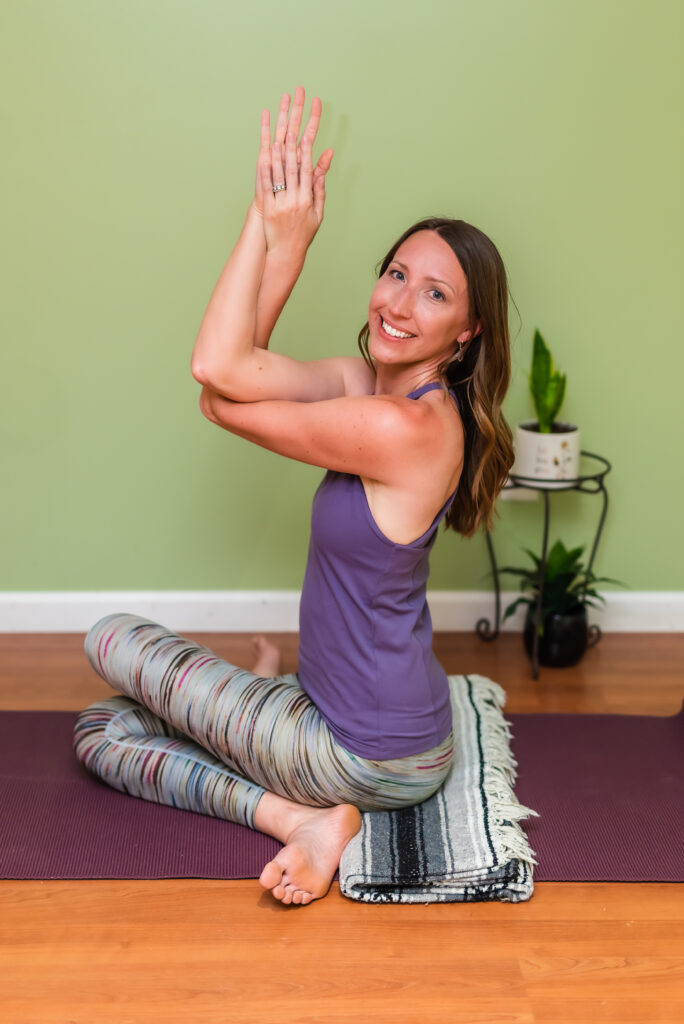
In Sanskrit, yoga postures are called asana.
The word asana means seat and in Patanjali’s Yoga Sutra, two qualities accompany that seat: steadiness and ease.
These qualities apply not only to the physical body, but also to a sense of steady alertness and easeful being in the mind. The purpose of these postures is to help maintain the health of the body, contain energy, cultivate tapas and prepare the body so that sitting for meditation becomes more comfortable and sustainable.
A short series of yoga postures can strengthen the muscles that support seated posture, release tension, and address discomfort or instability in the body. When the body feels more balanced and supported, it becomes less of a distraction during meditation. We’re able to adjust as needed while becoming less fidgety overall.
Yoga texts such as the Haṭhapradīpikā describe seated and kneeling postures for meditation. However, it’s important not to let the idea of the “right” posture prevent you from practicing. Meditation does not require you to sit cross-legged on the floor.
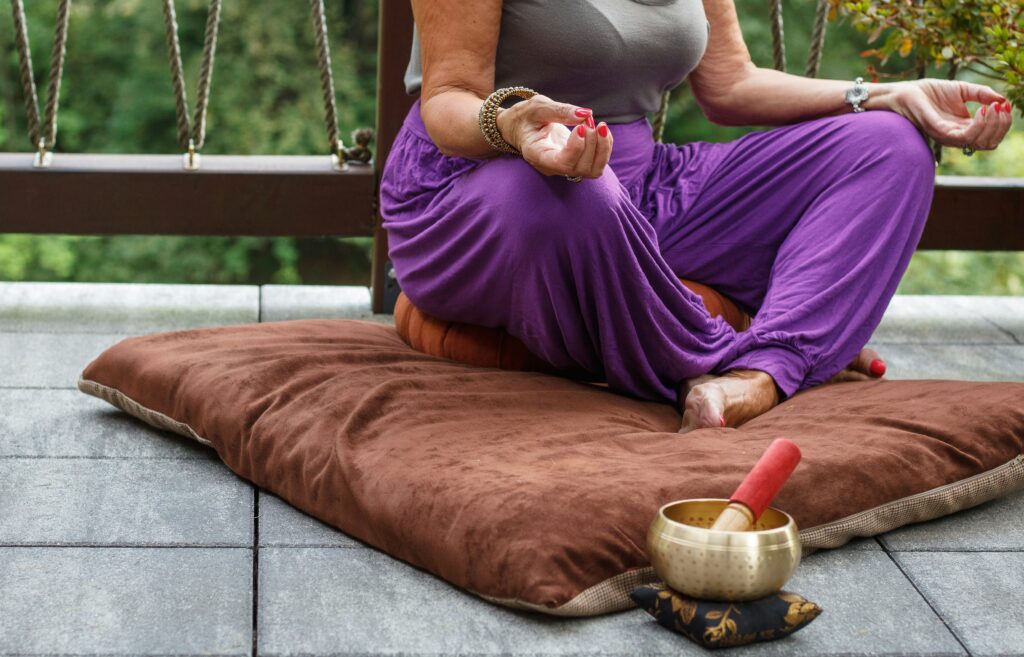
Meditation can be practiced sitting in a chair, using back support, sitting on a cushion or meditation bench to relax your hips and low back, or even lying down—with a bit of preparation to help prevent falling asleep.
Your posture does not have to look like the textbook image you might have in mind of “a person who meditates.” Anyone can be a person who meditates – and how the posture feels is more important than what it looks like. The most important thing is choosing a posture that is stable and comfortable, where you can breathe freely and allow your attention to gradually move away from physical form and toward the focus of your meditation.
Experiment to find the seat that feels sustainable for you. Stay with it for a few minutes at a time, allowing your endurance to build gradually.
A practice such as kaya sthira—focusing on the stillness of the body—or including a body scan as part of your preparation for meditation can help you balance effort and relaxation. It can also help you discern which adjustments are truly necessary and which arise from the mind expressing its restlessness through the body.
See my free Meditation 101 e-book for some photo examples of supported postures and tips for remaining established in asana.
*Featured photo by Aparna Johri on Unsplash
*Woman seated on cushions Photo by Susanna Marsiglia on Unsplash
Meghan Hogan E-RYT 500 is the owner of Maitri Yoga in Troy, NY. She is lead faculty for Yoga Vidya 200hr Teacher Training Programs and Founder of Move with Maitri, a Group Mentorship Program for Yoga Teachers.
Meghan’s mission in sharing yoga is to guide people home to their own hearts, trusting that cultivating this inner relationship fosters uplifted connections in homes and communities.